The Ultimate Guide to Train Travel in Italy
When I first planned my trip to Italy, I decided to use the train system for everything. It was the best decision I made.
Traveling by train in Italy is efficient, affordable, and one of the most enjoyable ways to see the country. You can sip a coffee while the Tuscan countryside rolls by instead of stressing about airport security or navigating Italian toll roads.
But for a first-timer, the system can look confusing. (Trenitalia? Italo? Regionale? What’s a binario?). This guide will answer all your questions and help you ride the rails like a local.
How to Travel by Train in Italy

First: Know the 3 Types of Italian Trains
Italy’s train network is fantastic, but it’s helpful to know what you’re booking.
- High-Speed Trains (The “Arrow” Trains): These are the Frecciarossa (Red Arrow) and Frecciargento (Silver Arrow). They are fast, modern, and connect the major cities like Rome, Florence, Milan, and Venice. They’re the most expensive but are worth it for long distances.
- Intercity Trains: A step down from high-speed. They connect big cities with medium-sized ones and make fewer stops. A great balance of cost, comfort, and speed.
- Regional Trains (Regionale): These are the slow, local workhorses. They are very cheap and stop at all the small towns. This is what you’ll take for day trips, like from Florence to Pisa or Lucca.
The Two Main Companies: Trenitalia vs. Italo
You’ll see two main companies when booking:
- Trenitalia: This is the national, state-owned railway. It runs all three types of trains (High-Speed, Intercity, and Regional). You will almost certainly use Trenitalia at some point.
- Italo: This is a private company that only runs high-speed trains. They compete directly with Trenitalia on popular routes (Rome to Florence, Milan to Venice, etc.).
Pro Tip: When booking a high-speed ticket, always check both Italo and Trenitalia for the same route. Their prices and times can be different, so you can pick the one that works best for you.
How, When, and Where to Book Your Train Tickets

This is the most important part. How and when you buy depends on the type of train.
Book AHEAD for High-Speed Trains
- When: Book your Frecciarossa, Frecciargento, and Italo tickets at least 2-4 weeks in advance.
- Why: Prices work like airplane tickets. The price goes up as you get closer to the travel date. Booking early can save you 50% or more. A last-minute ticket from Florence to Rome might be €50, but a ticket booked three weeks out could be €20.
- Where:
- Direct (Recommended): Use the official websites, Trenitalia.com or Italotreno.it. Both have English versions.
- Third-Party (Easiest): Sites like Omio or Trainline are very user-friendly. They show you tickets from both Trenitalia and Italo in one search, which makes comparing prices easy. They sometimes add a small service fee, but it can be worth it for the convenience.
Buy AT THE STATION for Regional Trains
- When: Buy your Regionale (regional) tickets on the day of travel, right before you go.
- Why: The price for regional trains is fixed. There is no discount for booking early, and a ticket is good for any regional train on that route for the next few hours. Buying at the station gives you total flexibility.
- Where: Use the self-service kiosks (ticket machines) at the station. They all have an English language option and are very easy to use.
The Most Important Rule: VALIDATE Your Ticket
This is the #1 mistake tourists make.
If you have a regional train ticket (a paper ticket you bought at the station), you MUST validate it before you get on the train.
Look for the small, green (or sometimes yellow) machines on the platform or in the station lobby. You stick your ticket in, and it stamps the time and date on it. If you don’t do this and a conductor checks, you will face a heavy fine on the spot.
(You do NOT need to do this for high-speed tickets, which are for a specific, reserved seat on a specific train).
What to Do With Your Luggage

Don’t pack more than you can comfortably handle yourself. You will have to lift your suitcase up 2-3 steep steps to get on the train, and there is no one to help you.
Once on board, you have a few options for storage:
- Overhead Racks: Perfect for backpacks and carry-on-sized suitcases.
- Large Luggage Racks: Located at the end of each car for your biggest suitcases.
- Under Your Seat: For small bags and purses.
Pro Tip: Always keep your valuables (passport, wallet, phone) in a small bag with you at your seat.
Popular Train Routes in Italy
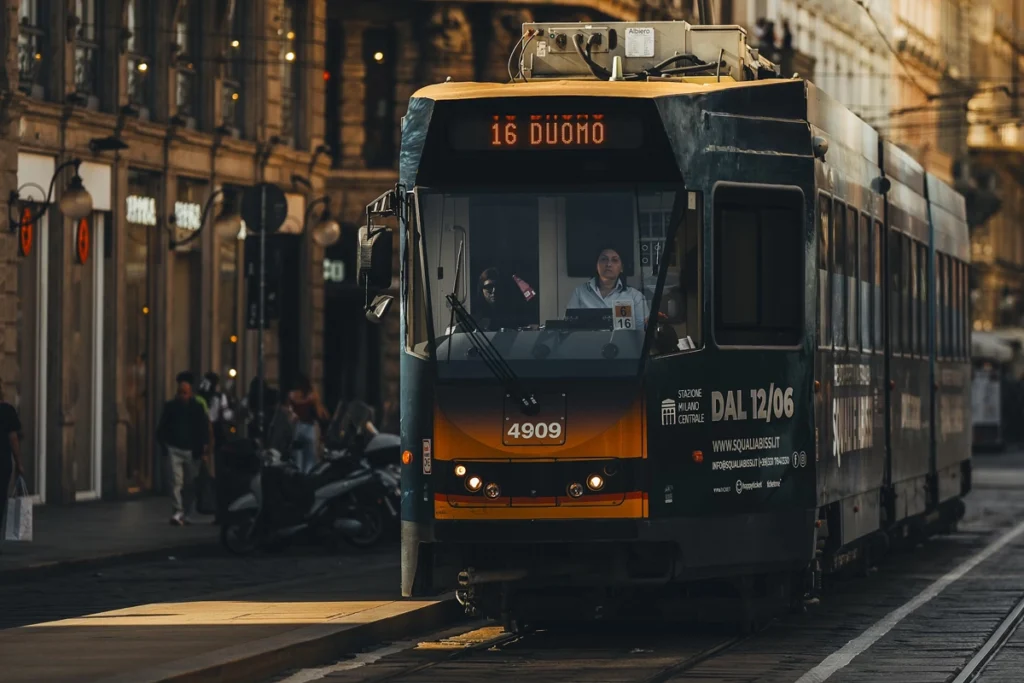
- Rome to Milan: About 3 hours. Connects Italy’s historic capital to its modern fashion hub.
- Florence to Venice: About 2 hours. Go from the heart of the Renaissance straight to the canals.
- Naples to Rome: Just over 1 hour. The perfect way to start or end a trip to Pompeii and the Amalfi Coast.
FAQs About Italian Trains

Is it easy to travel through Italy by train?
Yes. It’s the easiest and best way to get around. The network is extensive, and all major stations have signs in both Italian and English.
Is changing trains difficult?
Not at all. Your ticket will list your connecting train number. Just check the big digital departure boards (Partenze) for your train number to find its platform (binario). Give yourself at least 20 minutes for connections in big stations like Rome Termini or Milan Centrale.
Is a rail pass worth it in Italy?
Probably not. For 99% of tourists, a rail pass is not worth the money. It’s almost always cheaper to book individual high-speed tickets in advance and buy regional tickets as you go.
Is there security for trains in Italy?
Is there security for trains in Italy? No. There is no airport-style security. You just walk from the station lobby to your platform. On high-speed lines, there may be a quick ticket check at a gate before you enter the platform area, but it takes 10 seconds.
Are there toilets on the trains?
Yes, all trains have toilets. Their cleanliness can… vary. High-speed trains are generally fine; on an old regional train, it’s a bit of a gamble.
📌 Love this post? Pin it! 📌
✈️ Traveling to Italy?
Heading all over Italy? Check out some these helpful posts:
- Take the best day trips from Rome by train.
- Heading to Rome? Here’s my list of the best Colosseum tours.
- Discover how to visit Milan in a day with my One day in Milan guide.
- Find out why you shouldn’t miss Verona in my 21 reasons to visit Verona guide!
- Read my walking guide to Florence! Even find out how to visit Michelangelo’s tomb.